We are hiring a Machine Learning Scientist to train, validate and ship the predictive models that power our molecular design platform. You will build models that score chemical molecules for developability (ADMET), potency, synthesizability and 3D structure, working alongside chemists, biologists and platform engineers.
Compensation
The salary range for this role is $132,000 - $258,500.
Responsibilities
Train and maintain ML models for ADMET and developability endpoints such as solubility, permeability, metabolic stability, toxicity and aggregation risk.
Build potency and binding models (QSAR, ligand- and structure-based) to rank and prioritize molecules against targets.
Train, validate and ship predictive models that power our molecular design platform, working with chemists, biologists and engineers.
Compensation
The salary range for this role is $132,000 - $258,500.
Responsibilities
Train and maintain ML models for ADMET and developability endpoints such as solubility, permeability, metabolic stability, toxicity and aggregation risk.
Build potency and binding models (QSAR, ligand- and structure-based) to rank and prioritize molecules against targets.
In this role, you’ll apply your expertise to help train next-generation AI systems. Your work will shape how models learn, reason, and perform through high-quality, real-world input.
Responsibilities
Design, evaluate, and critique chemistry and computational chemistry problems, workflows, and reasoning chains to support AI benchmarking initiatives.
Provide expert-level insights on reaction mechanisms, synthesis planning, spectroscopy analysis, molecular simulations, and electronic structure methods.
Assess and optimize experimental protocols, simulation parameters, and software configurations for accuracy and reproducibility.
Analyze chemical, spectroscopic, and simulation data and provide actionable recommendations.
Leverage domain knowledge to guide the development and validation of chemistry-related AI models and tools.
Requirements
PhD in chemistry, computational chemistry, chemical biology, materials science, or a closely related field.
Nice to have: Academic experience (postdoc, research scientist, faculty, or equivalent)
Nice to have: Peer-reviewed publications
Nice to have: Patents
Nice to have: Open-source scientific software contributions
Lead computational chemistry efforts to design and model oncology-targeted therapeutics, integrating AI/ML and structure-based approaches.
Compensation
The annual base pay for this position ranges from 124,713.60 - 187,070.40 USD Annual [80% - 120% ]. Our positions offer eligibility for various incentives—an opportunity to receive short-term incentive bonuses, equity-based awards for salaried roles and commissions for sales roles.
Responsibilities
Generate testable design hypotheses integrating structural insights, SAR, and biophysical data
Apply docking, pharmacophore modeling, and data-driven design to prioritize compounds
Build, validate, and deploy predictive AI/ML models for high-throughput experiment design
Develop computational methods for antibody–drug conjugates and proximity-inducing agents
Partner with medicinal chemistry, biology, biophysics, DMPK, and safety sciences
Harness structure-based design, ligand-based approaches, and modern AI/ML to guide high-impact discovery programs across new modalities in oncology targeted discovery.
Compensation
The annual base pay for this position ranges from 124,713.60 - 187,070.40 USD Annual [80% - 120% ]
Responsibilities
Generate testable design hypotheses, integrating structural insights, SAR, and biophysical data to guide medicinal chemistry and accelerate decision-making.
Apply docking, pharmacophore modeling, and data-driven design to prioritize compounds that improve potency, selectivity, and developability.
Build, validate, and deploy predictive models using contemporary toolkits to support high-throughput experiment design and increase hit-to-lead success.
Develop and refine computational methods for antibody–drug conjugates and bifunctional, proximity-inducing agents, expanding design capabilities beyond small molecules.
Partner closely with medicinal chemistry, biology, biophysics, DMPK, and safety sciences to align models with mechanistic understanding and project goals.
Requirements
Ph.D. in computational chemistry or a related field
A computational role focused on building models and workflows that transform raw analytical chemistry data (LC-MS) into labels for reactivity ML models and drug discovery.
Compensation
This role offers a base salary of $165,000-$180,000, along with meaningful equity ownership and competitive benefits.
Responsibilities
Automated interpretation directly from raw instrument output
Peak detection, product identification, adduct and fragment reasoning, feature annotation across the whole sample
Build agentic pipelines that process whole campaigns end to end
Own and manage the analysis pipeline: how raw data moves from instrument to label
Decide data quality, develop analytical QC policies, and record processing choices
Seeking a Machine Learning Scientist II to accelerate drug discovery through advanced analytics and AI, developing predictive models for complex biological and chemical datasets.
Compensation
Base pay salary range for this full-time position for candidates working onsite at our headquarters in Redwood City, CA is listed below. $202,000—$238,000 USD
Responsibilities
Develop, implement, and evaluate machine-learning models that support drug discovery questions including compound activity, selectivity, developability, target engagement, and phenotypic screening outcomes.
Perform exploratory data analysis and quality assessment on chemical, biological, imaging, and phenotypic datasets.
Prepare and integrate heterogeneous datasets including chemical structure and screening data, structural biology outputs, molecular simulation outputs, and high-content imaging or morphological profiling data.
Apply appropriate modeling approaches including supervised learning, deep learning, graph-based methods, and ensemble methods.
Use sound validation strategies to assess model performance, robustness, applicability, and limitations.
Requirements
Ph.D.
M.S.
-Ph.D. in machine learning, computational biology, computational chemistry, computer science, statistics, bioinformatics, or a related quantitative field or M.S. with relevant industry experience.
Technically strong Information Scientist to advance computational chemistry initiatives within the organization, combining scientific expertise with software development skills.
Compensation
CAS offers a competitive salary and comprehensive benefits package, including a generous vacation plan, medical, dental, vision insurance plans, and employee savings and retirement plans.
Responsibilities
Apply computational chemistry techniques to model stereochemistry, coordination chemistry, and molecular interactions.
Design and implement reusable frameworks for chemical data processing, search, and visualization.
Use AI-assisted tools and approaches to support chemical structure recognition, reaction analysis, and related curation workflows.
Stay current on emerging AI capabilities relevant to chemistry and assess their fit and accuracy for specific scientific applications.
Collaborate with product owners, subject matter experts, and developers to groom backlogs and deliver solutions in Agile environments.
Requirements
PhD or Master’s degree in Chemistry, Computational Chemistry, or a related field
Nice to have: Experience evaluating or validating AI-generated outputs against scientific ground truth
Nice to have: Curiosity about how AI tools are reshaping chemistry workflows
Nice to have: Track record of adopting new tools effectively
Skills
Senior Specialist, Data Science / Modeling & Informatics
Seeking a highly motivated computational scientist to build algorithms, tools, and workflows that integrate predictive modeling, agentic scientific reasoning, and physics-based insight for drug design and development.
Compensation
$159,000 - $251,000
Responsibilities
Develop novel AI/ML algorithms and computational methods for representation, prediction, generation, reasoning, and decision-making.
Rigorously evaluate AI/ML methods against appropriate computational and experimental benchmarks.
Develop and apply modern deep-learning approaches for molecular discovery combining machine learning with physical and biophysical understanding.
Develop agentic workflows that integrate predictive models, scientific tools, experimental data, and simulations.
Collaborate directly with medicinal and computational chemistry project teams to apply AI/ML to molecular design.
 (Senior) Machine Learning ScientistAbiologics · Watertown, US
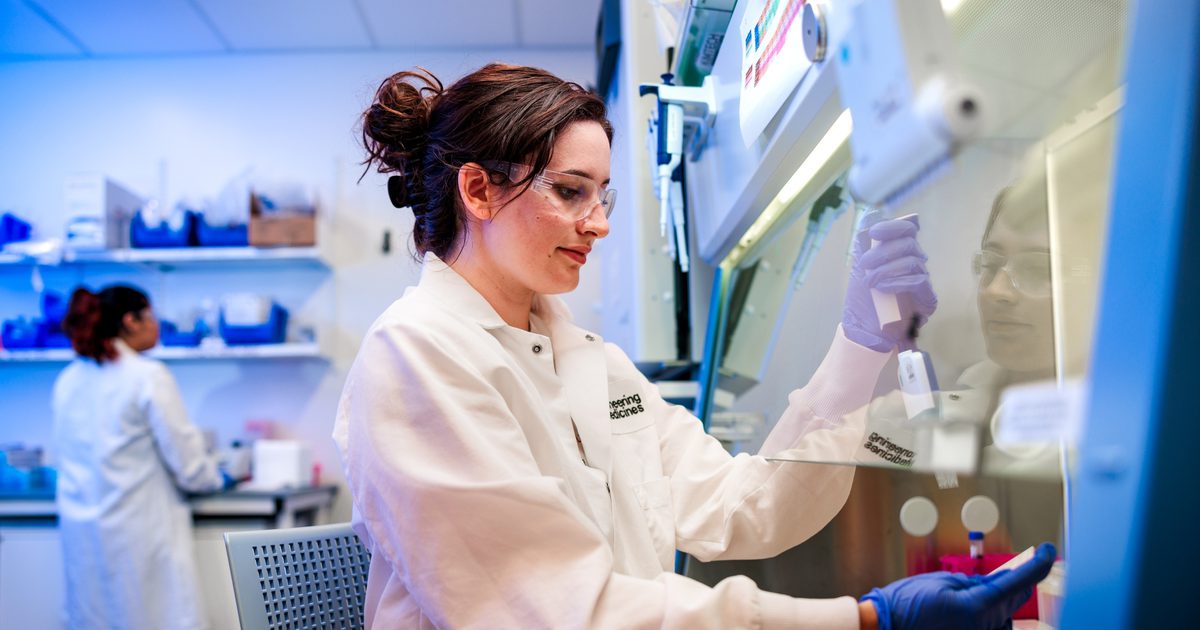 Machine Learning ScientistFlagship Pioneering, Inc. · Watertown, US
 STEM Expert – Chemistry & Computational Chemistry (PhD)Xperteez Technology · Remote
 Senior Computational Chemist - Oncology Targeted DiscoveryAstraZeneca · Cambridge, US
 Senior Analytical Data ScientistSatomic · San Diego, US
 Machine Learning Scientist II, Drug Discovery AnalyticsRevolution Medicines · Redwood City, US
 Senior Specialist, Data Science / Modeling & InformaticsMerck · South San Francisco, US