Seeking an AI Biologist to join the Protein Design & Engineering team, building benchmarks to test AI agents' ability to handle real biological workflows in protein design.
Compensation
$140K–$180K OTE (on-target earnings), with no ceiling.
Responsibilities
Find measured design, binding and engineering data and turn real design decisions into file-based tasks with automatic graders
Write gold-standard answers from raw data
Write Python pipelines that compute answer keys
Build interface tasks: hotspot calls, interface versus crystal contact, specificity against off-targets, and affinity changes on mutation
Cover the full workflow: generate, filter, rank, combine, revert, triage pools and trade off competing objectives
Requirements
PhD (or equivalent experience) in protein design, protein engineering, structural biology, biophysics, computational biology or a related field
Own the design‑make‑test‑model loop for protein design, combining computational models with experimental validation.
Compensation
Consulting engagement: $3,000 to $5,000 per month. Full-time conversion base salary: $80,000 to $200,000 annually, depending on experience, with equity and deal-contingent upside.
Responsibilities
Improve and extend discrete diffusion and protein folding models, including model architecture, attention, and hierarchical reasoning.
Operate and refine a biological design inference platform, analyzing usage patterns and diagnosing user behavior.
Write, debug, and operate production protocols for liquid‑handling robots and plate automation.
Design and run BLI and SPR assays, fit kinetic curves, conduct quality control, and troubleshoot experimental failure modes.
Develop robust protocols for cloud labs and manage internal screening instrumentation.
Responsible for executing and technically owning custom bead‑coupling projects and providing Luminex bead‑conjugation services in a regulated laboratory environment.
Responsibilities
Execute and document custom coupling of proteins, antibodies, antigens, peptides, nucleic acids, and other biomolecules to Luminex beads
Maintain traceability of critical reagents, bead lots, conjugation materials, equipment, methods, and resulting data
Support customized conjugation of molecules to Luminex beads in a regulated environment
Conduct critical reagent characterization and stability assessment using analytical techniques
Support change‑control, corrective‑action, method‑qualification, equipment‑qualification, and audit‑readiness activities
Requirements
Bachelor’s Degree in Life Science (Biology, Biochemistry, Immunology or related discipline)
Master’s Degree in Life Science (Biology, Biochemistry, Immunology or related discipline)
Ph.D. in Life Science (Biology, Biochemistry, Immunology or related discipline)
Nice to have: Master’s Degree with 2-3+ years experience
Lead protein engineering research to discover and optimize therapeutic antibodies and proteins.
Compensation
$88,500 - $161,700
Responsibilities
Think creatively and assist in designing and performing experiments to identify and validate the next generation of large molecule therapeutics
Contribute to building and improving next-generation technology platforms for future therapeutics
Contribute to process improvement of molecular biology, screening protocols and molecule characterization
Work collaboratively and communicate with project teams to achieve critical research objectives and timelines
Maintain timely, detailed, and well-organized records, including electronic notebooks, laboratory information management systems, presentations, and reports
Requirements
Bachelor’s or Master’s degree in Biochemistry, Molecular Biology, Protein Engineering, Biotechnology, Cell Biology, or a related STEM field
Gather and integrate information on target proteins, ligands, chemical tools, assay options, and relevant literature to support early project decisions
Contribute to the design of biochemical and biophysical assay cascades for hit finding, validation, and mechanism‑of‑action studies
Help define appropriate protein constructs, reference compounds, controls, orthogonal methods, and success criteria together with internal specialists and external partners
Participate in scientific discussions with CROs and other partners, review study plans and data, and help identify follow‑up experiments
Requirements
PhD in chemical biology, medicinal chemistry, biochemistry, or a closely related field
Nice to have: postdoctoral or industry experience at the chemistry‑biology interface
Nice to have: experience in induced‑proximity approaches or targeted protein degradation
Nice to have: experience in development or use of biochemical or biophysical methods such as SPR, BLI, MST, DSF, TR‑FRET, AlphaLISA, ITC, native MS, or ligand‑observed NMR
Nice to have: experience working with modern cellular assay technologies, like NanoBRET and NanoBIT, HiBit or cellular protein stability shift assays
company-sponsored 401(k); pension; vacation benefits; medical, dental, vision and prescription drug benefits; flexible benefits; life insurance; death benefits; time off and leave of absence; employee assistance program; fitness benefits; employee clubs and activities
 AI Biologist - Protein Design & EngineeringNewLatchBio · San Francisco, US
 Computational and Experimental ScientistNewClera · New York, US
 Applications Scientist, Antibody CharacterisationNewRefeyn Ltd · Oxford
 Chemical Biologist, Hit FindingOrion Corporation · Espoo, Finland+4 more
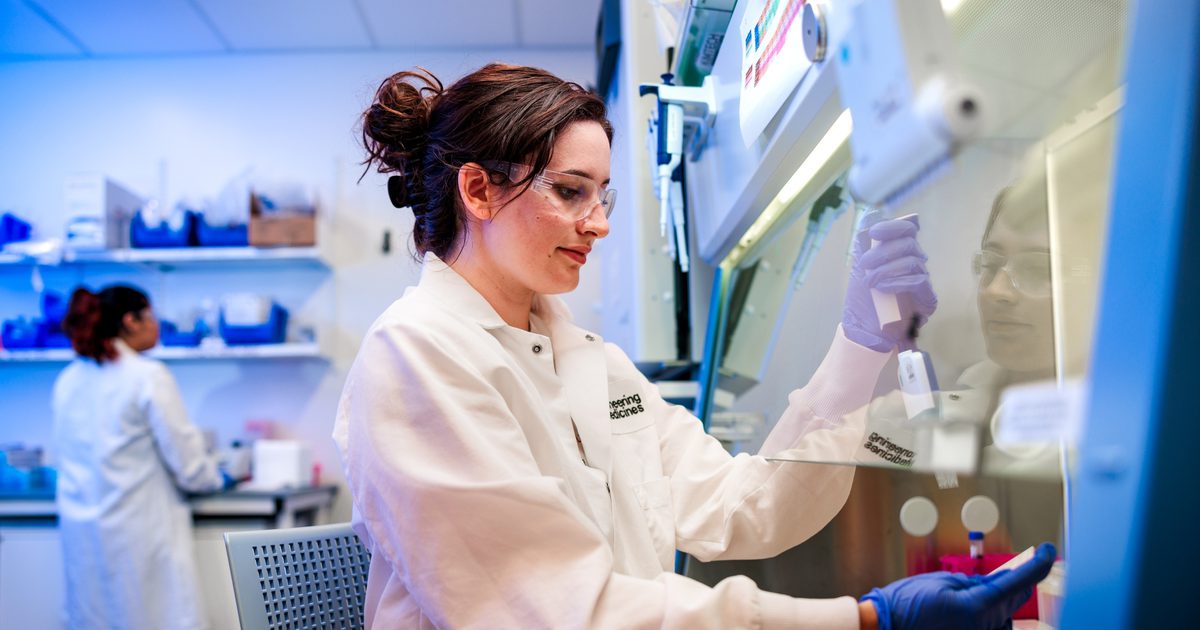 Research Associate I/II, Protein SciencesFlagship Pioneering, Inc. · Cambridge, US
 Bioassay Scientist Idiasorinsp · Austin, US
 Senior Biologist - Protein EngineeringLilly · San Diego, US
 Senior Research Associate, Analytical DevelopmentSystimmune · Bothell, US+1 more
 Sr. Scientist I, Antibody EngineeringModeX Therapeutics · Weston, US