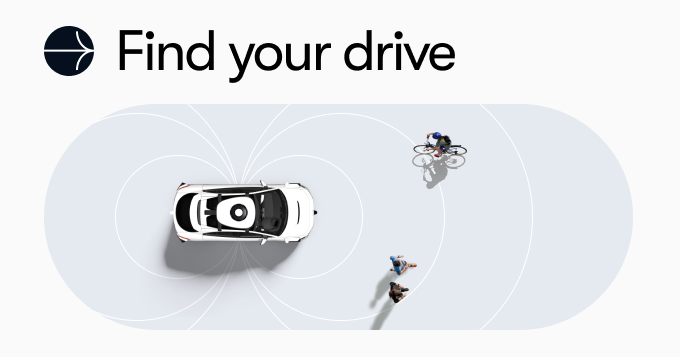
Implement, train, and evaluate generative models for video and physical world simulation.
Compensation
The expected hourly rate for this full-time position is listed below. Interns are also eligible to participate in the Company’s generous benefits programs, subject to eligibility requirements. Hourly Masters Pay $70—$70 USD The expected hourly rate for this full-time position is listed below. Interns are also eligible to participate in the Company’s generous benefits programs, subject to eligibility requirements. Hourly PhD Pay $85—$85 USD
Responsibilities
Implement, train, and evaluate generative models (such as diffusion models, flow matching, or autoregressive transformers) for video and physical world simulation.
Experiment with unified 3D/4D and spatiotemporal representations that generalize across diverse scenes, vehicle platforms, and sensor modalities.
Investigate conditioning, fine-tuning, or distillation methods to improve temporal consistency, physical realism, and inference speed for closed-loop simulation.
Partner with mentors and researchers across Waymo and frontier AI labs at Google to adapt foundation world models and translate research prototypes into Waymo’s simulation pipeline.
Requirements
MS or PhD in Computer Science, Machine Learning, Computer Vision, Robotics, or a related field
Data Scientist II focused on detecting sophisticated invalid traffic in Amazon Ads, applying advanced statistical and machine learning techniques at petabyte scale.
Responsibilities
Define and frame new research problems in fraud detection
Apply new machine learning approaches to detect sophisticated invalid traffic
Perform broad data analysis to build business insights
Work with unstructured and massive datasets
Produce research reports
Requirements
Master's degree in Science, Technology, Engineering, or Mathematics (STEM)
Nice to have: Perl
Nice to have: benchmarking GenAI model performance
Nice to have: cross-disciplinary project experience
Lead the development of AI/ML methods for biologics design, integrating protein science and drug discovery to accelerate therapeutic candidate optimization.
Compensation
The salary range for this position is: $169,320.00 - $219,120.00. Gilead considers a variety of factors when determining base compensation, including experience, qualifications, and geographic location. These considerations mean actual compensation will vary. This position may also be eligible for a discretionary annual bonus, discretionary stock-based long-term incentives (eligibility may vary based on role), paid time off, and a benefits package.
Responsibilities
Develop novel machine learning approaches to support biologics discovery and lead optimization.
Apply and extend protein language models, foundation models, and representation learning methods for therapeutic protein design.
Build predictive models linking sequence, structure, and experimental measurements to key molecular properties.
Develop structure-aware learning approaches that incorporate protein conformation, interfaces, and molecular context.
Design and evaluate generative methods for exploring protein sequence space and proposing improved therapeutic candidates.
Requirements
Ph.D. in Computational Biology, Machine Learning, Computer Science, Structural Biology, Biophysics, Bioengineering, or a related quantitative field
Nice to have: protein language models and foundation models for proteins or antibodies
Nice to have: AlphaFold-class models
Nice to have: inverse folding methods
Research Scientist Intern, Computer Vision - Video Intelligence (PhD)
As a Research Intern, you will work alongside leading experts in computer vision, generative modeling, and multimodal learning, contributing to research projects at the frontier of developing advanced video generation models.
Responsibilities
Conduct research on advanced topics in video generation and understanding, including but not limited to text-to-video generative models, image-to-video generative models, video understanding models, unified native video generative models.
Design, implement, and evaluate novel algorithms and model architectures.
Collaborate closely with researchers and engineers across the Video Intelligence group and broader GenAI teams.
Contribute to publications in top-tier conferences and journals in AI, computer vision, and machine learning.
Present findings and share insights that help shape both ongoing research and future directions.
Requirements
Ph.D. degree in Computer Science, Electrical Engineering, or related field
Nice to have: video generation
Nice to have: temporal modeling
Nice to have: multimodal learning
Nice to have: unified native video generative models