Perform routine cell culture to prepare and quality-check viral stocks and run biochemical assays like SDS-PAGE, Western blot, and ELISA, supporting immunoassays.
Responsibilities
Perform routine cell culture to prepare and quality-check viral stocks following established SOPs
Run biochemical assays: SDS-PAGE, Western blot and ELISA
Support immunoassays, including viral neutralization assays and Luminex reagent preparation
Keep detailed records in electronic lab notebooks and maintain sample inventories
Organize and track reagents and samples to keep the lab running smoothly
Requirements
Bachelor's degree in biology, immunology, microbiology, biochemistry or a related life science
Représenter l’équipe dans sa fonction de support analytique aux activités de procédé (USP et DSP), à échelle de laboratoire comme de production, et être le référent scientifique analytique des équipes projets impliquées dans le développement de biomolécules.
Responsibilities
Représenter l’équipe dans sa fonction de support analytique aux activités de procédé (USP et DSP), à échelle de laboratoire comme de production
Être le référent scientifique analytique des équipes projets impliquées dans le développement de biomolécules, propriétaire comme client, inscrites dans des phases cliniques I à III et pré-commerciales
Définir et coordonner les activités de laboratoire de méthodes bio-analytiques (ELISA, DNA, Binding,…) et physico-chimique (uHPLC, CE-SDS, cIEF,…)
Assurer le développement de méthodes et leur implémentation dans le respect des impératifs de délais et de budgets
Influencer la stratégie analytique pour le développement, l’optimisation de méthodes, les études de stabilité ou de comparabilité, et la caractérisation
Requirements
Ingénieur en biotechnologie
Docteur en Sciences ou formation supérieure équivalente dans le domaine scientifique ou pharmaceutique
Expert analytique au sein du département PDS&T, supportant le pipeline et les produits commerciaux, impliqué dans le développement de procédés et de dispositifs en phase tardive, du cycle de vie IND au BLA.
Responsibilities
Représenter l’équipe dans sa fonction de support analytique aux activités de procédé (USP et DSP) à échelle de laboratoire comme de production
Être le référent scientifique analytique des équipes projets impliquées dans le développement de biomolécules
Définir et coordonner les activités de laboratoire de méthodes bio-analytiques (ELISA, DNA, Binding,…) et physico-chimique (uHPLC, CE-SDS, cIEF,…)
Assurer le développement et l’implémentation des méthodes dans le respect des impératifs de délais et de budgets
Influencer la stratégie analytique pour le développement, l’optimisation de méthodes, les études de stabilité ou de comparabilité
Requirements
Ingénieur en biotechnologie
Docteur en Sciences ou formation supérieure équivalente dans le domaine scientifique ou pharmaceutique
Research technologist to join a collaborative, discovery-driven team developing new treatments for breast cancer, involving in vitro and in vivo drug testing.
Locations (4)
Phoenix, Arizona, United States
Scottsdale, Arizona, United States
Jacksonville, Florida, United States
Rochester, Minnesota, United States
Responsibilities
Maintain cancer cell lines and patient tumor-derived cells using aseptic technique
Establish and maintain 3-dimensional cultures (spheroids, organoids) from patient tumor tissue
Perform in vitro drug testing, including dose-response studies, IC50 determination, combination and synergy studies, and medium-throughput drug screening
Senior Scientist, Translational R&D who will work within the Nonclinical Translational R&D team, actively supporting cellular, molecular, & histological research to enable translation of viral vector constructs for therapeutic application in support of Rocket’s gene therapy clinical pipeline.
Compensation
The expected salary range for this position is $118,000 to $158,000.
Responsibilities
Independently plan & execute histology, cellular & molecular experiments according to approved methods and techniques
Lead the design & conduct of molecular, biochemical and related assays including slide preparation, immunohistochemical labeling and imaging, DNA/RNA/protein extractions, qPCR, ddPCR, ELISA, Western blot, & flow cytometry
Applying prior tissue culture experience, conduct cell line maintenance & propagation while supporting identification and development of potentially novel cellular models and analytical methods
Develop, optimize, and validate advanced Immunohistochemistry (IHC) and Immunofluorescence (IF) assay protocols for detection of transgene protein and biomarker targets
Utilize high-resolution microscopy and high-content imaging to capture cellular and tissue structures, protein expression levels and localization using quantitative image analysis
Requirements
PhD in Molecular & Cell Biology or related Biological Sciences field
Support cellular, molecular, & histological research to enable translation of viral vector constructs for therapeutic application in support of Rocket’s gene therapy clinical pipeline.
Compensation
The expected salary range for this position is $74,000 to $98,000.
Responsibilities
Execute cellular, molecular, & histological assays according to approved methods and techniques, with minimal supervision
Conduct molecular, biochemical and related assays including DNA/RNA/protein extractions, qPCR, ddPCR, ELISA, Western blot, immunohistochemical labeling & flow cytometry with minimal supervision
Cell line maintenance & propagation, applying prior hands-on tissue culture experience with a variety of cell lines; support identification and application of potentially novel cell lines and analytical methods supporting ongoing translational R&D
Perform cell-based assays & associated analytical methods with minimal supervision
Compile & synthesize data in tabular and graphical formats using standard software
Support the development and operation of a high-throughput siRNA screening platform, focusing on siRNA screening workflows, cell-based assay, and data analysis to accelerate siRNA lead discovery and optimization.
Responsibilities
Develop, optimize, and execute cell-based assays to support high-throughput siRNA screening and lead optimization
Design, optimize, and troubleshoot siRNA transfection methods for siRNA delivery across different cell types and assay formats
Develop and qualify potency and mechanistic assays using readouts such as RT-qPCR, ELISA, flow cytometry, or imaging, and execute experiments to evaluate siRNA activity, potency, and selectivity
Establish and maintain mammalian cell culture workflows for diverse cell lines relevant to screening applications
Partner with high-throughput siRNA screening and cross-functional program teams to use automated liquid handlers and other automation systems
Requirements
BS in Molecular Biology, Genomics, Bioinformatics, Bioengineering, or a related discipline
MS in Molecular Biology, Genomics, Bioinformatics, Bioengineering, or a related discipline
PhD in Molecular Biology, Genomics, Bioinformatics, Bioengineering, or a related discipline
Design, develop, and execute in vitro, ex vivo, and in vivo pharmacology studies to generate decision-enabling data for early-stage therapeutic programs in immunology and immuno-oncology.
Responsibilities
Design, develop, optimize, and execute in vitro, ex vivo, and in vivo pharmacology studies to characterize target biology and evaluate therapeutic candidates.
Develop functional immunology assays using human and murine primary immune cells and established cell lines.
Generate high-quality, reproducible datasets and maintain complete, accurate experimental records.
Apply mechanistic knowledge of immunology, immuno-oncology, and disease biology to interpret results and recommend next steps.
Collaborate with multidisciplinary teams across biologics discovery, translational science, bioinformatics/data science.
The Biologics Optimization team within Biologics Discovery is responsible for the design and optimization of lead biologic variants across multiple therapeutic modalities to achieve differentiated functional outcomes aligned with desired therapeutic mechanism of action (MoA). In this position, the Principal Scientist will serve as a scientific leader and subject matter expert in biologics optimization, driving and dissecting protein engineering strategies that translate molecular design into improved biological function across diverse therapeutic modalities.
Compensation
The anticipated base pay range for this position is : $120,000.00 - $207,000.00
Responsibilities
Lead biologics optimization efforts across multiple therapeutic programs, translating target biology and desired mechanisms of action into rational protein engineering strategies.
Serve as a subject matter expert in function-driven optimization: develop and champion novel development efforts aimed at fulfilling strategic long-term antibody design/optimization initiatives and validation.
Develop optimization strategies that integrate antibody sequence, structure, developability, and biological function to achieve program objectives.
Develop and champion novel display-based platform development efforts aimed at fulfilling strategic long-term antibody design/optimization initiatives and validation.
Lead/participate on project teams to advance discovery portfolio projects. Act as a point of accountability for optimization engineering asks and manage project timelines independently.
Requirements
Research Associate - Open Rank
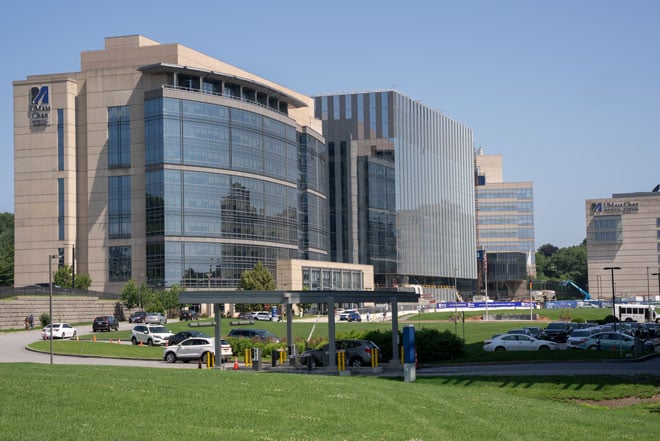
University of Massachusetts Medical School · Posted Nov 17, 2026
Provide operational support to the laboratory and perform research experiments in neuroscience focused on pain and addiction neurobiology using rodent behavioral approaches and wet lab techniques.
Responsibilities
Perform laboratory experiments
Interpret data and form conclusions
Maintain accurate records and lab notebook
Review literature, publications and grants
Assist with data analysis and mathematical computations
Requirements
Bachelor’s degree in Biological or Natural Science