We are seeking an innovative and highly motivated Analytical Development Scientist to join our R&D organization. In this role, you will contribute to the development and commercialization of next-generation analytical technologies with a primary focus on HPLC products and processes supporting critical to quality attributes in the biotechnology and biopharmaceutical industries.
Compensation
The salary range estimated for this position based in Massachusetts is $92,000.00–$135,000.00. This position may also be eligible to receive a variable annual bonus based on company, team, and/or individual performance results in accordance with company policy.
Responsibilities
Develop, optimize, and apply analytical HPLC methods to characterize product performance and support new product development.
Design and execute experiments to evaluate product attributes relevant to regulated bioprocessing, biologics development, and drug-quality monitoring.
Develop analytical strategies to assess critical-to-quality attributes, including purity, aggregation, charge variants, identity, concentration, or other relevant product and process attributes.
Generate, analyze, and interpret complex analytical datasets to guide technical decisions, product requirements, and development strategy.
Evaluate HPLC product performance across relevant use conditions, sample types, workflows, and customer applications.
Requirements
Ph.D. or M.S. with 3+ years of experience in Analytical Chemistry, Biochemistry, Chemical Engineering, Biotechnology, Pharmaceutical Sciences, or a related scientific field
Bachelor's with 5+ years of experience in Analytical Chemistry, Biochemistry, Chemical Engineering, Biotechnology, Pharmaceutical Sciences, or a related scientific field
Associate Scientist, Drug Formulation on the Research team to help expand what’s possible for patients with serious diseases, focusing on development, optimization, and characterization of nanoparticle-based drug delivery systems.
Compensation
$103,000.00-131,000.00 Annual
Responsibilities
Work on formulation and characterization of lipid nanoparticles and other nanoparticle-based delivery systems for platform development and project support
Design and execute formulation studies, including nucleic acid encapsulation into nanoparticle systems, analytical testing, and stability evaluations to finalize formulation compositions for RNA/gene-based therapies
Perform comprehensive physicochemical characterization of nanoparticle formulations, including size, polydispersity index, surface charge, encapsulation efficiency, drug loading, and release kinetics
Apply a broad set of analytical techniques such as DLS, NTA, UV-Vis spectroscopy, SEC, SDS-PAGE, HPLC, and fluorescence-based assays to evaluate nanoparticles and drug products
Synthesize and develop nanoparticle-based formulations for various therapeutic areas
Requirements
Master's degree in Pharmaceutics, Chemistry, Biomedical Engineering, Chemical Engineering, or related field
Bachelor's degree and 2 years of experience in Pharmaceutics, Chemistry, Biomedical Engineering, Chemical Engineering, or related field
Lead scientist responsible for analytical and functional characterization of biopharmaceutical products, including monoclonal antibodies and antibody-like biologics.
Responsibilities
Develop and execute SPR assays to generate selection criteria for antibody panels
Evaluate and integrate protein–protein interaction technologies to support therapeutic candidate selection
Implement high-throughput epitope binning for large antibody panels
Perform antibody Fc characterization studies for regulatory submissions
Solve technical problems and develop new approaches to advance characterization and screening technologies
Senior Research Scientist/Engineer leading CMC development and operations for protein therapeutics and nanoparticle vaccines at the Institute for Protein Design.
Compensation
Pay Range Minimum: $150,000.00 annual
Pay Range Maximum: $175,008.00 annual
Responsibilities
Own CMC development strategy and sequencing
Coordinate with Core R&D Lead for Process Development
Support integrated development timelines and budgets
Assess manufacturability of research-stage candidates
Provide design input for preclinical studies
Requirements
Ph.D. in biochemistry, bioengineering, chemical engineering, or related field
Lead integrated CMC program for early-stage biologics, providing strategic, technical, and operational direction across cross-functional teams to advance pipeline biologics from candidate selection through early clinical development and FIH milestones.
Compensation
The salary range for the primary location of this role is: $156,900.00 - $247,000.00. The successful candidate will be eligible for annual bonus and long-term incentive, if applicable.
Responsibilities
Lead and operationalize matrixed CMC project teams
Drive strategic and operational alignment across key CMC interfaces
Proactively identify program vulnerabilities and formulate contingency plans
Define and champion phase-appropriate analytical control strategies
Guide and contribute to technical authoring of regulatory filings
Requirements
Ph.D. in Analytical Chemistry, Biochemistry, Chemical/Biochemical Engineering, Biophysics, or related scientific discipline
Assist in developing processes, formulations, and analytical assays for immunotherapy drug products.
Responsibilities
Prepare formulations for various drug delivery platforms
Characterize physiochemical properties of drug products using techniques such as UPLC, DLS, pH, osmolality, microscopy, zeta potential, plate-based absorbance assays
Assist in development of assays to define critical quality attributes of drug substances and products
Collect, analyze and organize data, troubleshoot and communicate findings in written reports and presentations
Proactively identify issues and develop solutions in a multidisciplinary environment
This role focuses on protein expression, purification, and analytical characterization in support of platform development and therapeutic discovery programs using generative AI drug design.
Compensation
The salary range for this role is $126,000 - $181,500.
Responsibilities
Design and execute workflows for recombinant protein production, including transient mammalian expression, purification, and quality assessment.
Contribute to the design, execution, and troubleshooting of experiments that improve throughput, reproducibility, and data quality.
Partner closely with Antibody Discovery, Antibody Engineering, Computational Biology, and other cross-functional teams to support integrated project execution.
Serve as a mentor to junior team members and a subject matter expert within the company in the areas of recombinant production and protein stability metrics.
Establish and maintain strong documentation practices, experimental rigor, and reproducible workflows.
Requirements
PhD
BS/MS degree with equivalent level of experience in protein biochemistry, molecular biology, chemical engineering, structural biology, analytical chemistry, or a related field
Nice to have: antibody discovery workflows
Nice to have: biologics development
Nice to have: automated multi-step midscale purification
We are seeking a highly motivated Senior Scientist II with deep expertise in lipid chemistry to drive the design of novel ionizable lipids and the next generation of lipid nanoparticle (LNP) formulations for nucleic acid delivery.
Compensation
The salary range for this role is $126,000 - $181,500.
Responsibilities
Design and synthesize novel ionizable lipids, including head group, linker and tail variants, using structure-activity relationships and the pKa, biodegradability and tolerability profile of each series to guide design.
Lead the design of LNP molar compositions, optimizing the ratios of ionizable lipid, helper lipid, cholesterol and PEG-lipid (and exploring alternative or novel excipients) for potency, stability and tolerability.
Prepare LNP formulations at small scale (e.g., microfluidic or other mixing methods) to enable medium- to high-throughput screening of new lipids and compositions.
Plan and conduct formulation screening studies, defining critical formulation parameters and building structure-property relationships across lipid libraries.
Characterize lipids and LNPs using appropriate analytical methods (e.g., NMR, LC-MS, HPLC with CAD/ELSD, DLS, encapsulation and apparent pKa assays) and ensure lipid identity and purity.
 Co-Op, Targeted Non-Viral DeliveryLila Sciences · Cambridge, US
 Intern, Drug Product Development, CMCCorner Therapeutics · Watertown, US
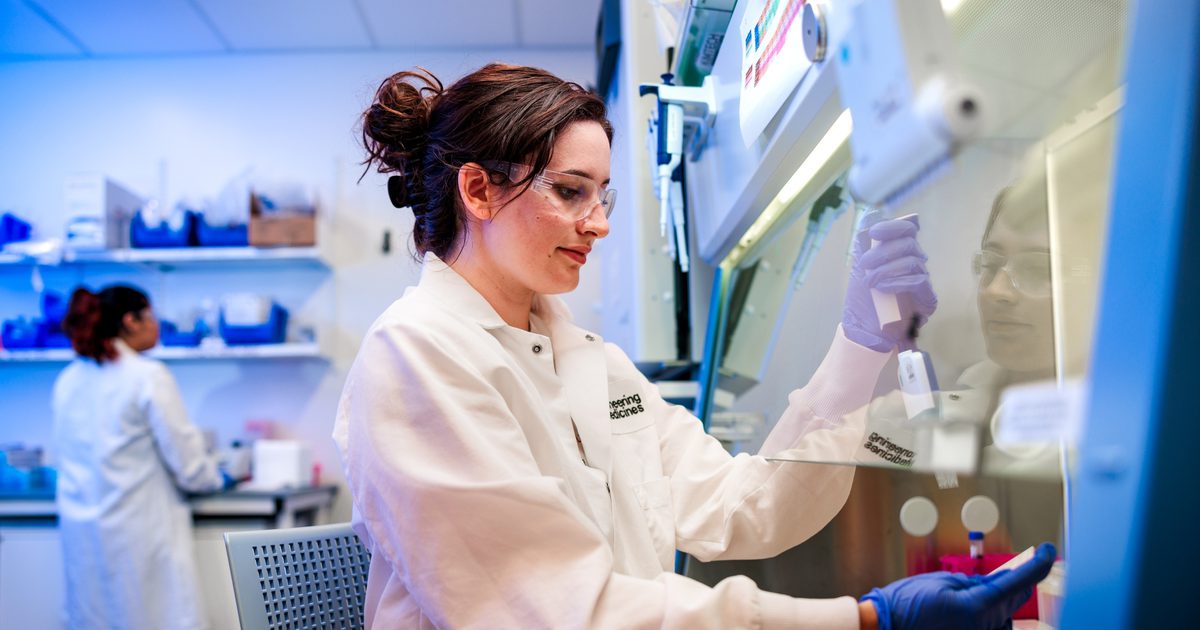 Sr. Scientist, Protein & Cell SciencesFlagship Pioneering, Inc. · Somerville, US
 Senior Scientist, LNP FormulationsSerif Biomedicines, Inc. · Cambridge, US